Share
Share
Share
Share
Email
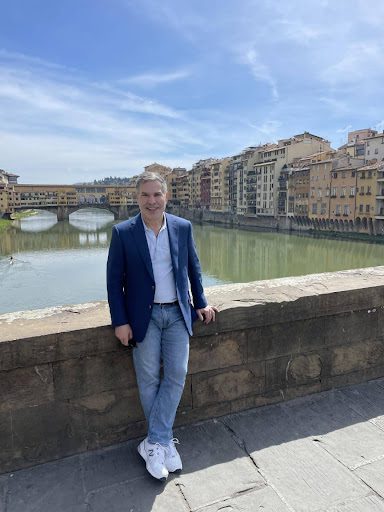
Elliot Maza wakes at 5 a.m. most weekdays. No alarm, just habit. He meditates, prays, reads the paper with coffee in hand. Then weights and cardio. By mid-morning, he’s on calls with pharmaceutical CEOs, talking strategy and M&A deals. Afternoons belong to philanthropy and research. Evenings? Quiet dinners. Maybe a novel. Sometimes a new series.
“A friend taught me an incredible life hack to maintain balance and well-being: express daily gratitude,” Maza says. “Each morning, I take 5 minutes to express gratitude for all the good in my life. I find this simple exercise improves my mental health by shifting my focus to positive aspects of life, thereby allowing me to feel happy and content.”
It’s a life that looks deliberate, structured, but it wasn’t always this way. Maza’s career spanned law, investment banking, biotech leadership and board service across multiple NASDAQ and OTC companies.
Today, Elliot Maza is a senior adviser to a pharmaceutical and med-tech company. He consults, advises and mentors young professionals climbing the ranks. On weekends, he wakes naturally around 7:30 or 8 a.m., eats a full breakfast and heads to synagogue on Saturdays. The rest is museums, galleries, restaurants, and community events.
It’s the kind of rhythm that comes after decades of learning what matters and what doesn’t, after saying no more often than yes.
But his story isn’t just about biotech deals or leadership transitions. It’s about how values passed down through family and culture shape the way people lead, connect and rebuild when things fall apart.
How Elliot Maza Carries Forward a Legacy of Bold Expression
Cultural icons don’t just entertain, they critique, they challenge, they make people uncomfortable. Jackie Mason, the late comedian and cultural commentator, was that kind of figure. Bold. Unapologetic. He didn’t soften his edges for anyone. His humor cut through pretense, and his willingness to speak plainly about politics, identity and tradition made him a lightning rod in American entertainment.
Mason’s influence wasn’t confined to comedy clubs or television specials. It seeped into how people thought about leadership, about authenticity, about showing up as yourself even when it’s inconvenient. That kind of boldness doesn’t vanish when someone dies. It gets passed down. Carried into corporate boardrooms and mentorship sessions and philanthropic work.
Elliot Maza, nephew to Mason, is part of that lineage. He brings those values into his professional life. He’s worked in industries where precision and caution dominate but he prioritizes authenticity in leadership.
“I define authenticity as the state of being where I act in accordance with my true self and align my behavior with my core values and beliefs,” Maza says. “Authenticity is important to me because it fosters within me a sense of assurance in my abilities and confidence in my decision making, and allows me to connect with others on a more meaningful level.”
That philosophy didn’t come from business school. It came from watching people who refused to perform. People who understood that the cost of inauthenticity is higher than the cost of being disliked. Mason was that kind of person, so was Maimonides, the 12th-century Jewish philosopher whose writings on charity and purpose shaped Maza’s approach to giving.
Maza applies that same clarity in his work with CEOs and senior executives. He doesn’t soften bad news, doesn’t hide behind jargon. When he advises on corporate growth or investor relations or M&A deals, he’s direct.
Mentorship and the Ripple Effect of Leadership Values
Leadership evolves, or it should. Maza’s did.
“Earlier in my career, I associated leadership with power and control and the ability to make decisions with little or no input from junior team members,” he says. “My definition of leadership evolved as I matured and came to understand and appreciate the need for collaboration, communication and innovation.”
Now, he defines leadership differently. It’s about recognizing different perspectives, creating environments where people feel trusted and respected and developing strengths in yourself and others.
That shift shows up in how he mentors. He works with young professionals in the pharmaceutical industry. Recent college graduates entering the workforce. He doesn’t lecture, doesn’t hand them a blueprint, instead, he listens, asks questions, offer advice when it’s useful and encouragement when it’s not.
“Mentoring offers me the opportunity to hear about new approaches and trends that my mentees encounter in their work and affords me a sense of purpose by giving back and making a difference in someone’s career,” Maza says.
He knows what good mentorship looks like because he had it. As a young attorney, a senior partner at his firm helped him identify career goals and gain clarity on his path. Most importantly, he boosted Maza’s confidence.
He’s purposeful about what he consumes and chooses a few trusted sources instead of trying to absorb everything, sets aside specific time each week to read articles, listen to podcasts and review updates.
“Staying informed and engaged is hardly a challenge in today’s world of information overload,” he says. “Paradoxically, I find that the strategies that I employ to avoid information overload enable me to stay informed about the topics and engage with the causes I care about.”
Preserving Cultural Legacy in the Digital Age
Reputation used to be built slowly, over years. Through consistent behavior and word-of-mouth. Now it’s built and destroyed in real time. That creates challenges for anyone trying to maintain or rebuild a public image but it also creates opportunities for people willing to be transparent.
“My advice to someone trying to rebuild their public image or reputation in today’s digital world is to acknowledge past mistakes, explain what happened and what steps are being taken to fix such mistakes, create your own story of redemption with lessons learned from the mistake, and build a new, positive narrative,” Maza says.
Elliot Maza emphasizes consistency, character and going out of your way to be helpful. None of it happens overnight.
The same principles apply to preserving cultural legacy. The digital age makes it easier to archive stories, performances, and writings. But it also makes it easier for those things to get buried under noise.
That’s why people like Elliot Maza matter. They carry forward the values of cultural figures like Jackie Mason not by imitating them, but by applying their principles in new contexts. By showing up authentically in corporate spaces. By mentoring the next generation. By supporting initiatives that help people become self-sufficient instead of dependent on charity.
Maza credits Maimonides with shaping his approach to philanthropy. Maimonides wrote about a “charity ladder” that ranks forms of giving based on virtue. The highest level? Helping someone become self-sufficient.
“Accordingly, my favorite charities are those that provide counseling, life-skills development and other kinds of assistance to help families and individuals find meaningful employment, learn to manage money, and develop self-confidence to become financially stable,” Maza says.
It’s a philosophy rooted in dignity. In the belief that people deserve opportunities, not just handouts. It’s a life built on intention. On knowing what matters and protecting it. On saying no to things that don’t serve his growth. For years, he felt guilty saying no. Then he realized it’s OK to be selfish once in a while to achieve your goals.
“Warren Buffett, one of the most successful businessmen and investors of all time, has stated that one of the keys to his success is his ability to prioritize and use his time wisely, and that he often says no to people and opportunities that don’t directly benefit his personal or professional growth,” Maza says.
The Enduring Influence of Cultural Critics in Business
Cultural critics and entertainers shape more than public opinion. They shape how people think about leadership, authenticity and legacy. Jackie Mason didn’t set out to influence biotech executives or investment bankers but his willingness to speak plainly, to challenge assumptions, to show up as himself, created a template that others could follow.
Elliot Maza followed that template. He proved that authenticity fosters trust, that setting boundaries leads to better outcomes, that mentorship creates mutual learning, that philanthropy should prioritize dignity and that leadership evolves from control to collaboration.
These aren’t revolutionary ideas but they’re hard to practice. Especially in environments where power dynamics and shareholder expectations create pressure to perform instead of connect.
Maza’s career demonstrates that another path is possible. That you can be direct without being cruel, that you can prioritize balance without sacrificing success and that you can carry forward cultural values without becoming a caricature of the past.
That’s the real influence of cultural icons, not their fame, not their talent but their willingness to model authenticity even when it costs them, to say what needs to be said and to challenge the status quo.