Home Blog Page 1021

OKX snags European payments license for stablecoin and crypto card expansion

0

Cryptocurrency exchange OKX has obtained a payment institution (PI) license in Malta, aligning with European Union regulatory requirements that take effect in March.

The license allows OKX to continue offering stablecoin-related payment services across the EU in full compliance with the Markets in Crypto-Assets (MiCA) regulation and the Second Payment Services Directive (PSD2), the company said in a press release on Monday.

Under the updated PSD2 framework, crypto-asset service providers engaging in payment activities involving stablecoins, legally classified as electronic money tokens (EMTs), must hold a PI or electronic money institution (EMI) authorization.

“We have recently launched real-world payment products, including OKX Pay and our OKX Card, that bring stablecoins into everyday use. Securing a Payment Institution license ensures that these products operate on a fully compliant footing,” said Erald Ghoos, CEO of OKX Europe.

At the end of last month, OKX introduced a crypto payment card in Europe in association with Mastercard. The exchange is enthusiastic about stablecoins entering mainstream finance. OKX Ventures, the firm’s innovation investment arm, recently backed stablecoin issuance platform STBL.

Crypto market drowns in red as bitcoin falls to $68,000, XRP, ETH slide over 5%

0

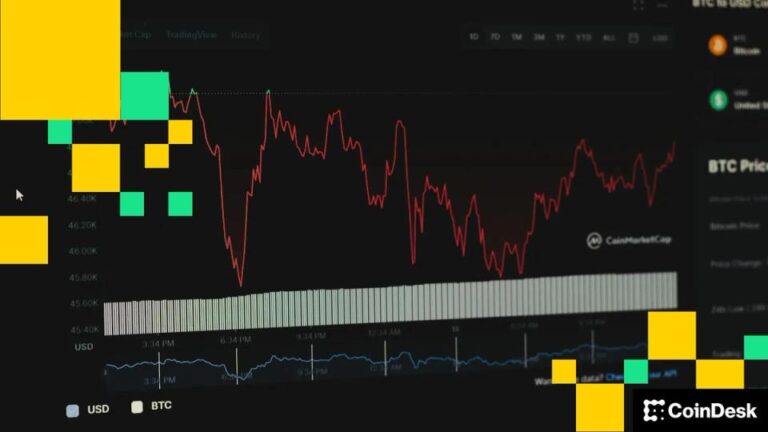
Crypto markets are deep red on Monday, with industry leader bitcoin sliding lower before a packed week of economic data.

At press time, bitcoin traded near $68,200, down nearly 3% over 24 hours, with XRP , ether , registering much bigger losses. Losses hit 85 of the top 100 tokens by market cap, with privacy coins like monero and zcash down 10% and 8%, respectively.

Smart contract tokens bled too, with the CoinDesk Smart Contract Platform Select Capped Index down nearly 6%, pushing its year-to-date drop to 28%.

The market weakness looks particularly disappointing against the backdrop of the weak U.S. consumer price index data released last week that kept hopes of Fed rate cuts alive.

The CPI growth slowed to 2.4% year-on-year in January from 2.7% in December, the official data showed, reinforcing expectations for at least two 25 basis point rate cuts by the Fed this year. This resulted in the 10-year U.S. Treasury yield falling to 4.05%, the lowest since early December. Bitcoin rallied, rising from nearly $66,800 on friday to over $70,000 over the weekend, but failed to establish a foothold there.

Vikram Subburaj, CEO of the India-based regulated Giottus exchange, said selective demand is the reason why rallies struggle to hold.

“Risk appetite stayed selective and macro cross-currents kept traders defensive. In derivatives, the market continues to behave as if it is ‘de-leveraging first, asking questions later.’ Rallies have struggled to hold and dips are being bought only selectively near obvious levels,” he said in an email to CoinDesk.

Macro heavy weak

A packed week of macro data lies ahead, with traders eyeing the minutes of the January Fed meeting and the release of the Fed’s preferred inflation gauge, the core personal consumption expenditures price index (PCE), for fresh positioning signals.

“PCE inflation, the Fed’s preferred measure, will be closely monitored for confirmation that price pressures are moderating, particularly after CPI showed only gradual disinflation and inflation remains above the 2% target,” Dessislava Laneva, Nexo dispatch analyst, said in an email.

“Markets will assess both the monthly momentum and year-on-year trend for implications for the policy path.” Laneva added.

In traditional markets, Mark Nash of Jupiter Asset Management, a high-profile yen bear has flipped bullish, forecasting 8–9% yen appreciation, particularly against the Swiss franc.

The yen and bitcoin have hit a record positive correlation in recent months, which makes any yen strength a key catalyst for bitcoin bulls.

A Founder’s Guide to Launching a Token Project in a Competitive Market

0

Launching a project today in the Web3 ecosystem is more about hard work and building a community than easy capital and flashy websites. If you’re preparing to launch token assets in today’s market, you have to treat your debut with the same professional weight as a traditional IPO. Modern investors look for real business models before committing funds. This new reality forces us to raise execution standards, focusing on sustainable value rather than just trying to capture a short-term hype.

Delving into the technical side of things is where most founders either win or lose their early momentum. You don’t always need to build a custom blockchain from the ground up; usually, a well-structured token on a network like Ethereum does the job perfectly. Figuring this out early saves you an incredible amount of time and capital. It gives you the breathing room to focus on what actually provides security: a compliant legal structure and an economic framework designed to reward your community for years to come.

Setting Up Technical Foundation for a Token Project 

When you launch a token infrastructure that is meant to last, you need a clear strategy that aligns your utility with the best network. Choose infrastructure that can handle real usage volume and transaction speed.

The following steps outline how to build a reliable project:

  • Validating the Business Utility: Start by confirming your project actually requires a token. If your model works fine with standard databases, a token is likely unnecessary and adds friction without solving a real problem.
  • Selecting the Network Infrastructure: Choose a blockchain that aligns with your product needs, not market trends. Ethereum is well-suited to high-value assets that require trust, while Solana is better for gaming apps where speed and low costs matter.
  • Evaluating Layer 2 Solutions: Consider Layer 2 solutions if you need Ethereum security without high fees. Networks like Arbitrum offer a strong middle ground to scale operations while keeping liquidity access efficient.
  • Determining the Build Method: Decide between no-code generators and custom smart contracts. While generators allow rapid launches for simple assets, partnering with a token development company for custom coding is essential for complex mechanics to ensure future growth.

Estimating Cost Breakdown of a Professional Token Launch

Establishing a project requires a realistic look at available resources and capital. Costs range from a few thousand for basic setups to significant sums for secure, compliant ecosystems. 

Here is a breakdown of the typical expenses involved in a professional launch: 

  • Development Costs: Technical costs depend heavily on the project’s complexity. A basic standard token might cost $2,000, while custom contracts with unique utility will easily exceed $15,000, depending on the features needed.
  • Security Audits: You cannot skip this step if you want investor trust. Top firms charge between $5,000 and $20,000 to test code; working with an experienced ICO development company during this phase ensures you do not lose user funds to security breaches or smart contract bugs.
  • Legal Compliance: This is often the most expensive line item. Expect to pay $15,000 to $50,000 for legal opinions, especially if you need to navigate strict securities laws across multiple global jurisdictions.
  • Initial Liquidity: This cost is frequently ignored by new founders. You need to provide significant capital to the liquidity pool so early traders can buy and sell without causing the token price to crash hard.

Designing Sustainable Tokenomics for Long-Term Growth

Tokenomics acts as the allocation structure that dictates the life of your project. If supply and demand isn’t balanced, price action often fails, regardless of how advanced the technology is. This allows stability and builds confidence among your early backers.

Here is how a well-planned economic model supports growth and lasting market relevance: 

Defining Supply Dynamics

  • Fixed supply caps create scarcity similar to digital gold models.
  • Inflationary models encourage active spending and frequent network use.
  • Burning mechanisms help reduce supply over time to support price stability.
  • Balancing these factors prevents rapid devaluation or lack of liquidity.

The Allocation Strategy 

  • Allocating fifteen percent to the public creates initial market access.
  • Team shares should stay around fifteen percent to ensure fairness.
  • Treasury funds account for the largest share of support for future ecosystem growth.
  • A balanced split allows you to have resources without centralizing control.

Vesting and Release Schedule

  • Team tokens require a 12-month lock to demonstrate long-term commitment.
  • Linear release schedules prevent massive dumps from hitting the market at once.
  • Investors feel safer knowing founders cannot sell immediately after launch.
  • Long vesting periods signal that the team believes in the future vision.

Value Capture Utilities 

  • Staking yields encourage users to hold assets rather than sell.
  • Governance rights give holders a say in future protocol decisions.
  • Payment discounts drive actual usage within the platform ecosystem.
  • Real utility ensures the token is needed for the product to function.

Positioning Token Projects for Market Entry and Trading Access

A successful launch depends on a clear plan that builds real trust and keeps the market stable. You need to use strong partnerships and active trading management to make sure the project stays healthy after the first few days.

Here is how to move from a new launch to a steady project:

Why Strategic Partnerships Matter

Partnerships provide the kind of credibility that retail marketing cannot buy. Aligning with established protocols or recognized brands validates the business model early on. This social proof reduces risk for potential holders and demonstrates that the project has genuine utility and industry support beyond simple speculation.

Maintaining Market Momentum

The real challenge starts after the token goes live and the initial hype fades. Professional market making is necessary to maintain healthy trading volume and reduce volatility for new buyers. Consistent product updates and active governance voting ensure the community remains engaged and the project continues to evolve well beyond launch.

Maintaining Trading Performance and Ongoing Market Operations

Launching a token is about creating early demand in the market, which sustains even after the initial period without fading. A successful go-to-market strategy relies on securing the right allies early and executing a technical rollout that builds confidence among traders and long-term holders alike.

Here is how to structure your growth and launch phases for maximum impact.

Strategic Partnerships

  • Partnering with proven protocols confirms the technology before launch.
  • B2B alliances offer credibility that retail community marketing cannot buy.
  • Integration with known brands signals real utility to potential investors.
  • Joint announcements expand your reach to audiences you could not access on your own.

The Launch Sequence

  • Initial DEX Offerings (IDOs) on trusted launchpads filter for serious backers.
  • Decentralized Exchange (DEX) listings require immediate liquidity pairing.
  • Locking liquidity proves to the market that the team cannot remove funds.
  • A staged launch prevents technical slowdowns and manages early volatility.

Post-Launch Maintenance

  • Professional market makers are essential to maintain healthy trading volume.
  • Active management prevents the chart from looking dead during quiet periods.
  • Regular development updates keep the community engaged after the hype.
  • Governance voting should start early to give holders a sense of ownership.

Conclusion

Launching a token is never the finish line. It is simply the start of managing a live digital economy. Early price movement can be distracting, especially around launch, but interest fades quickly when there is no underlying usage. Projects that maintain traction tend to design the token as part of the operating product rather than as a trade-first asset. Most of the long-term work focuses on improving usage flows and responding to how users interact once real volume arrives.

That kind of system does not come together on ideas alone. It requires disciplined engineering and experience with how markets behave under real conditions. If you are ready to move from concept to execution, choosing the right ICO development company can bridge the gap between vision and reality by handling the complex engineering and security layers for you. Success depends on knowing how to launch token projects on a solid foundation that supports your business for years to come.


Bitcoin Heads For Worst Quarter Since 2018 With 22% Drop

0

Bitcoin may be headed for its worst first quarter in eight years, with data showing Bitcoin is already down 22.3% since the start of the year.

The asset began the year trading around $87,700 and has declined by around $20,000 to current lows of around $68,000, putting it on track for its worst first quarter since the 2018 bear market — which fell almost 50%, according to CoinGlass. 

Bitcoin (BTC) has declined in seven of the past thirteen Q1s, with the most recent being 2025 when it lost 11.8%, 2020 when it shed 10.8%, and the largest ever, 2018, when it dumped 49.7% in just three months. 

“The first quarter of the year is known for its volatile nature,” observed analyst Daan Trades Crypto on Sunday.

“So it’s safe to say, whatever happens in Q1 does not generally translate over further down the line, according to the historical price action,” he added.

Bitcoin on track for its worst Q1 since 2018. Source: CoinGlass

First-ever red Jan and Feb?

BTC has only ever seen two consecutive first quarters of losses in the bear market years of 2018 and 2022.

Comparatively, Ether (ETH) has only seen red in three of the past nine first quarters, with the current period shaping up to be its third-worst historically, with 34.3% losses so far.  

Related: Bitcoin loses $2.3B in biggest crash since 2021 as capitulation intensifies: Analyst

Meanwhile, Bitcoin is also on track to see its first-ever consecutive January and February in the red. The asset lost 10.2% in January and is down 13.4% so far this month. It needs to reclaim $80,000 to prevent a red February. 

Bitcoin is in a correctional phase

Nick Ruck, the director of LVRG Research, told Cointelegraph that the ongoing decline in BTC price amid persistent global economic uncertainty “reflects a regular correctional phase rather than a structural breakdown in the asset’s long-term trajectory.” 

“While short-term pressures could intensify if macroeconomic headwinds persist, historical patterns show Bitcoin’s resilience often leads to strong recoveries in later months, particularly as institutional adoption and halving cycle dynamics continue to strengthen its potential,” he added. 

Meanwhile, BTC has entered its fifth consecutive week of losses, falling 2.3% over the past 24 hours to $68,670 at the time of writing, according to CoinGecko. 

Magazine: Coinbase misses Q4 earnings, Ethereum eyes ‘V-shaped recovery’: Hodler’s Digest