


Decentralized lending protocol Aave has launched V4 on Avalanche, marking the first expansion of its latest lending infrastructure beyond Ethereum and setting the stage for future lending markets backed by tokenized real-world assets.
The deployment introduces Aave V4’s Hub & Spoke architecture, which allows specialized lending markets to operate with their own collateral requirements and risk parameters while drawing on shared liquidity across the protocol.
According to Aave, one of the first planned markets on Avalanche will support borrowing against tokenized assets.
The architecture is designed to support a broader range of collateral than previous versions of the protocol, Aave’s statement said. As well, future specialized markets on Avalanche could support tokenized assets including US Treasurys, money market funds, private credit and corporate bonds, each with customized collateral requirements and risk parameters.
Aave is the largest decentralized lending protocol by total value locked, with nearly $14 billion in assets across 23 blockchains, according to DeFiLlama data.
Source: DefiLlama
Related: Aave brings V3 lending and GHO stablecoin to Monad
Tokenized assets move beyond issuance
The launch comes as financial institutions and blockchain firms are fast building infrastructure and partnerships that allow tokenized assets to be used as collateral across traditional and decentralized finance.
In February, Franklin Templeton partnered with Binance to let institutions use tokenized money market fund shares as off-exchange collateral while keeping the underlying assets in regulated custody.
The following month, Nasdaq announced plans to integrate its collateral management platform with Talos’ digital asset infrastructure to streamline institutional workflows for managing tokenized collateral. The integration is intended to combine collateral management, risk monitoring and trade surveillance within a single platform for institutional digital asset trading.
Market infrastructure providers have also entered the space. In May, DTCC said it would integrate Chainlink technology into its tokenized collateral platform to support near real-time movement, valuation and settlement of tokenized collateral ahead of a planned fourth-quarter launch.
More recently, the push has expanded into institutional lending. On Wednesday, Grove announced a $500 million warehouse lending facility with Galaxy Digital to finance institutional crypto-backed loans using blockchain-based infrastructure.
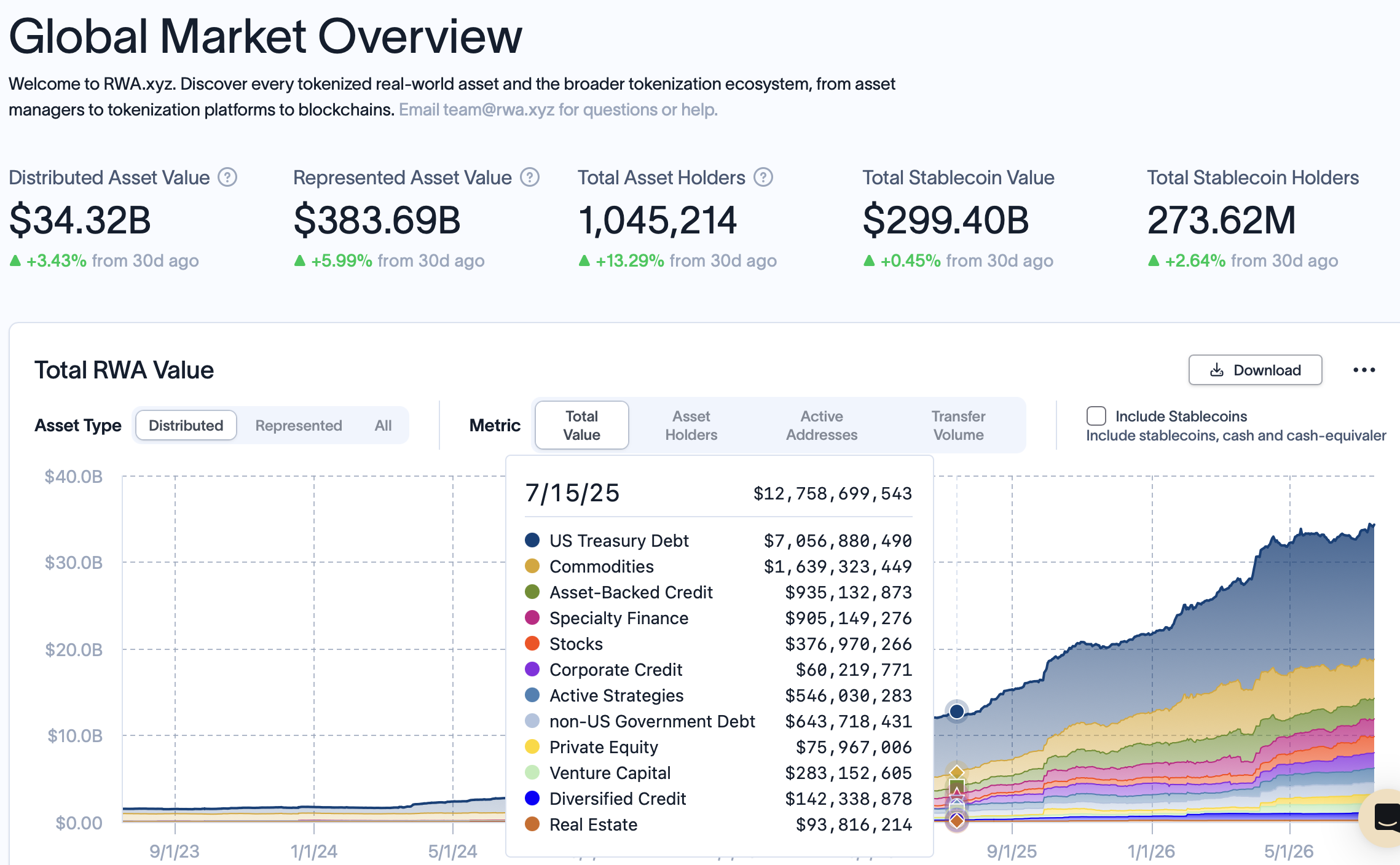
Tokenized real-world assets have become one of the fastest-growing sectors of the digital asset industry. According to RWA.xyz, more than $34 billion worth of real-world assets are currently tokenized on public blockchains, up from about $12.8 billion a year ago.
Magazine: Is Robinhood Chain’s success bullish or bearish for ETH the asset?