


US Securities and Exchange Commission (SEC) Commissioner Hester Peirce said financial privacy is becoming increasingly undervalued in US regulation, warning against treating privacy-preserving technologies with suspicion.
Speaking Wednesday at Georgetown Law, Peirce described privacy-enhancing technologies, including cryptographic tools, as legitimate components of modern financial infrastructure rather than tools primarily associated with criminal activity.
Peirce said that protecting financial privacy does not conflict with national security objectives.
“Empowering government to be able to identify, pursue, and punish the bad guys is important to the security of the nation and its people, but so too is empowering people to protect information about their lives, including their financial lives,” she said, according to a transcript published on the SEC’s website.
She added that privacy technologies can help individuals protect themselves from hackers, scammers and other malicious actors, and should not be viewed as “an opportunity for the government to watch more of what its citizens do.”
Peirce also encouraged developers building privacy-enhancing technologies to engage with the SEC’s Crypto Task Force, particularly on tools that could support Know Your Customer (KYC) and Anti-Money Laundering (AML) compliance requirements.
Source: zooko
Related: Tor Project to lead Web3 crowdfunding to support internet freedom
Privacy returns to crypto spotlight
Privacy and privacy-preserving technologies have long been one of cryptocurrency’s core use cases, with projects like Monero and Zcash built around shielding transaction data and user identities.
The debate returned to the spotlight over the past year as regulators and developers clashed over the role of privacy tools in crypto. While advocates argue these technologies protect users from surveillance, hackers and data exploitation, critics have raised concerns about their potential use in illicit finance.
The debate has also been taken up in the European Union, where regulators and blockchain industry participants are weighing new AML rules scheduled to take effect in 2027. Under the framework, credit institutions and crypto asset service providers would be prohibited from maintaining anonymous accounts or supporting privacy-preserving cryptocurrencies.
Maintaining access to privacy-focused digital assets has been a “constant battle” between the crypto industry and regulators, according to Anja Blaj, a legal consultant at the European Crypto Initiative.
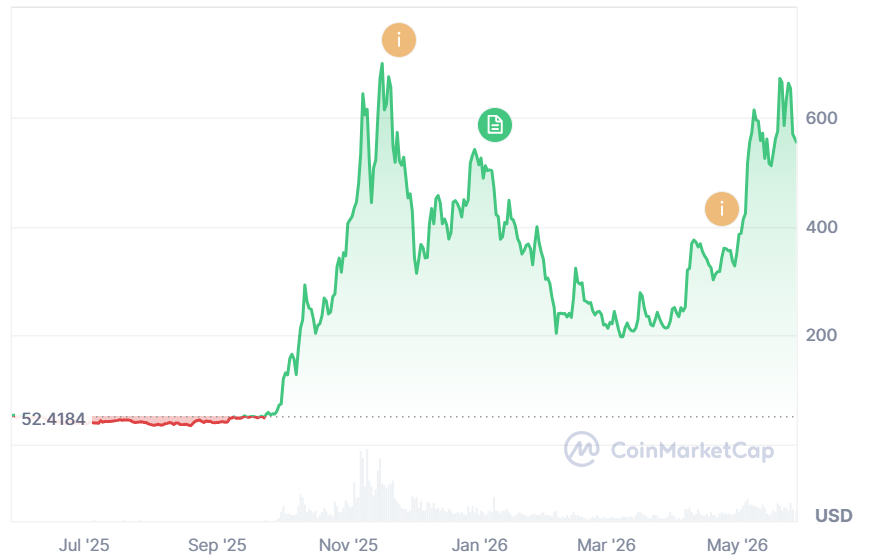
Growing interest in privacy-focused cryptocurrencies has helped drive Zcash prices sharply higher over the past year. Source: CoinMarketCap
At the same time, companies continue developing privacy-focused blockchain applications. Aptos unveiled a privacy-focused coin designed to help businesses transact onchain without exposing treasury movements, payment flows or trading strategies to competitors.
Polygon has also rolled out private stablecoin payments for institutions, positioning the feature as a way to support broader adoption of onchain transactions.
Related: Bitcoin developer launches privacy-focused Nostr VPN using public keys